
Keep the layout.
Retain a tub, tile installation or counter that already fits the room. The focus is the surface finish rather than a new footprint.
Bathtub, tile and countertop Refinishing for homeowners in New Jersey, Delaware and Pennsylvania. Explore a new look for existing surfaces before committing to replacement.
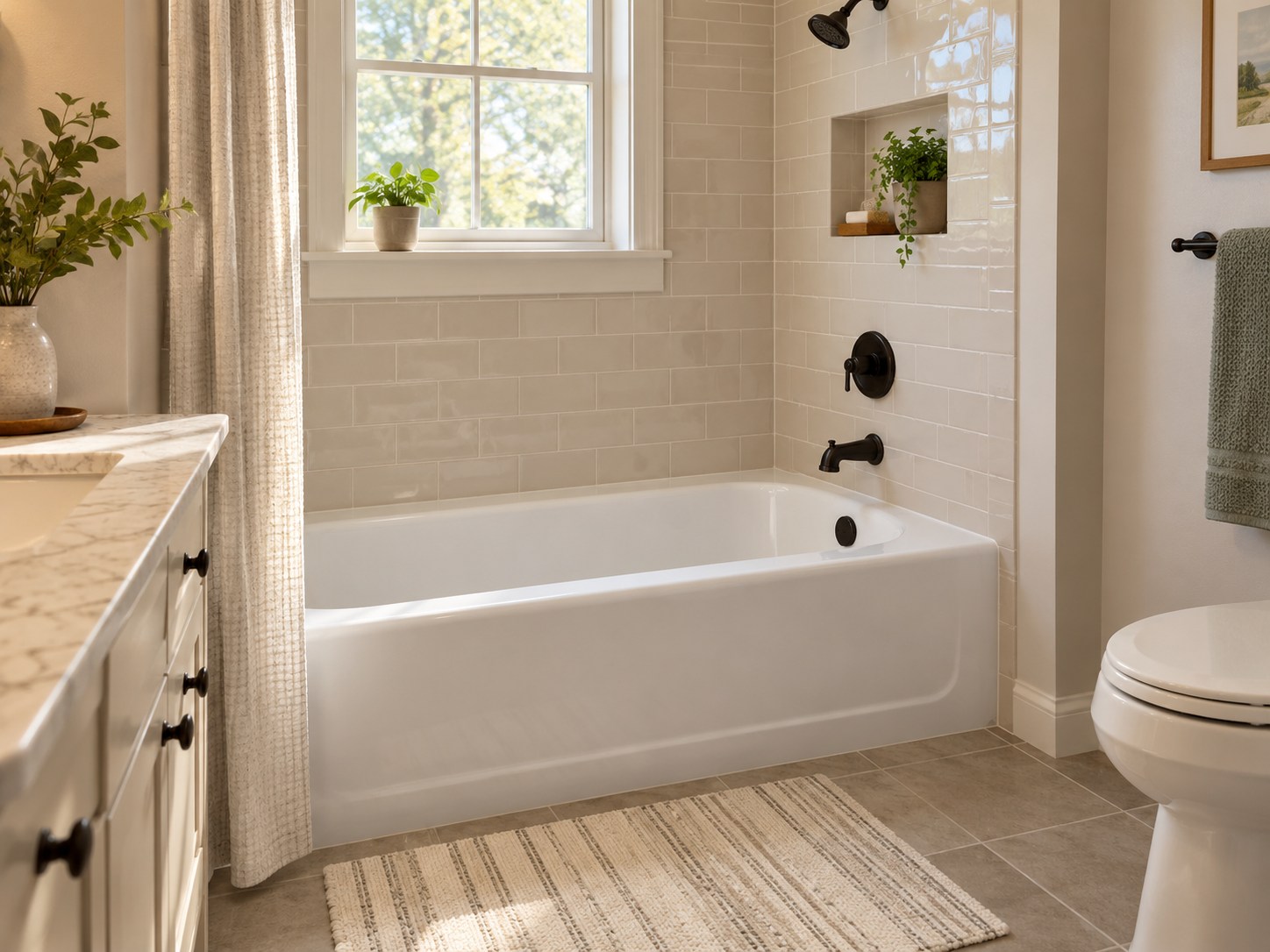
Refinishing renews a suitable existing fixture or surface with a specialized coating. The bathtub, tile installation or countertop stays in place. Its visible finish changes.
The work generally involves cleaning, preparing the surface for adhesion, addressing repairable imperfections and applying a compatible finish. You may hear it called resurfacing or reglazing. The preparation and coating system must suit the material and how it is used.
It is especially worth exploring when the layout works and the main problem is appearance: a dated color, surface wear or a finish that has lost its appeal.
Retain a tub, tile installation or counter that already fits the room. The focus is the surface finish rather than a new footprint.
Keeping suitable materials in place can reduce removal, disposal and the surrounding repair work a replacement may trigger.
Look beyond the price of a new fixture. Removal, installation, plumbing and adjacent repairs may all belong in a replacement budget.
A bathtub can have a worn finish or outdated color while its size, shape and position still work for the bathroom. Refinishing renews the exposed surface while retaining the tub itself.
Professional systems may be suitable for porcelain-coated metal, fiberglass, acrylic or other tub materials, but compatibility is product-specific. The tub’s material and condition must be assessed before a coating is selected.
If the tub was refinished before, the old coating also matters. A loose or failing finish may need removal before new preparation begins.
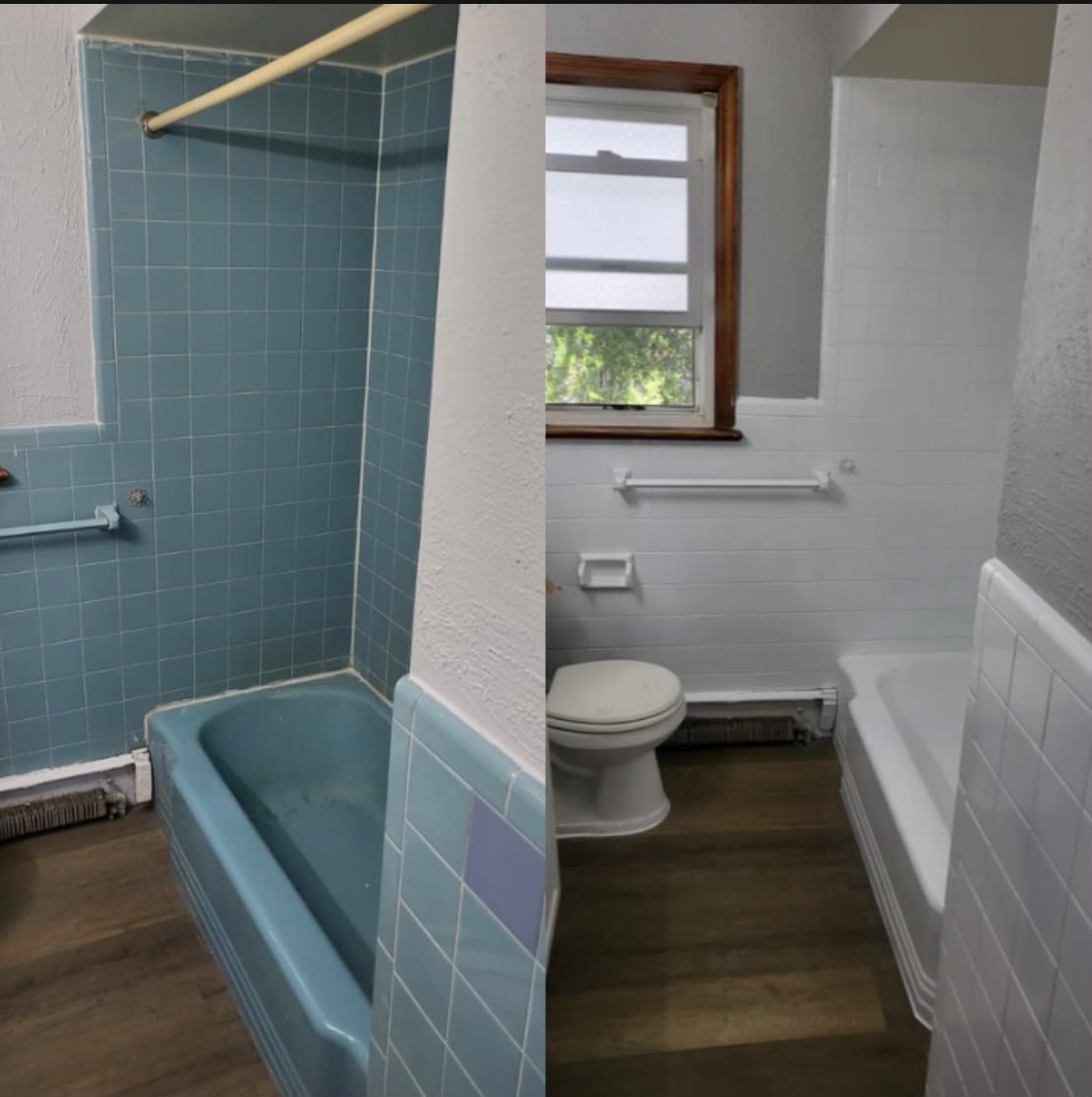
Blue bathtub and wall tile alongside a white finish.
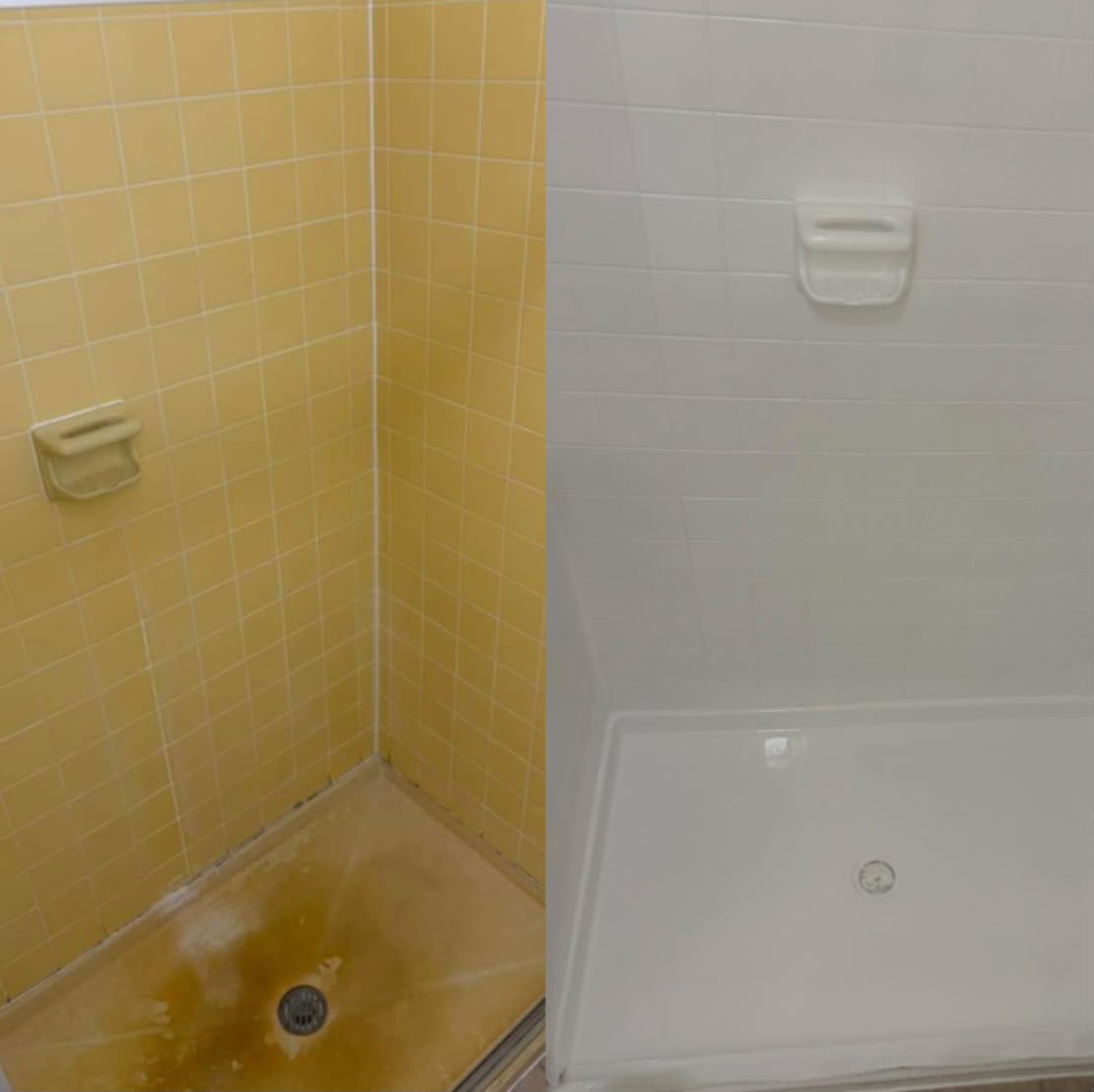
Yellow shower tile and pan alongside a bright white finish.
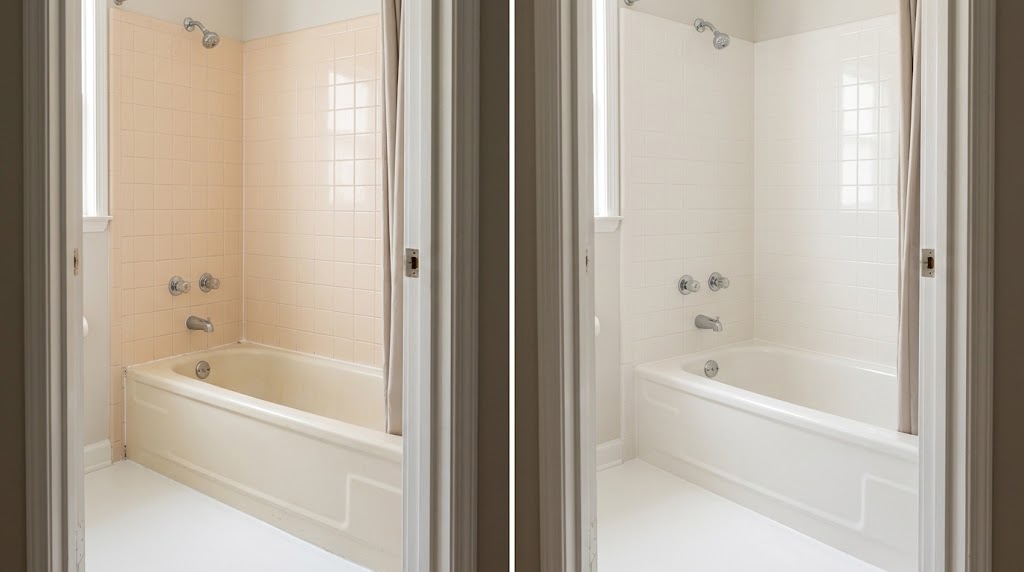 BeforeAfter
An existing bathtub and square tile surround refreshed to white.
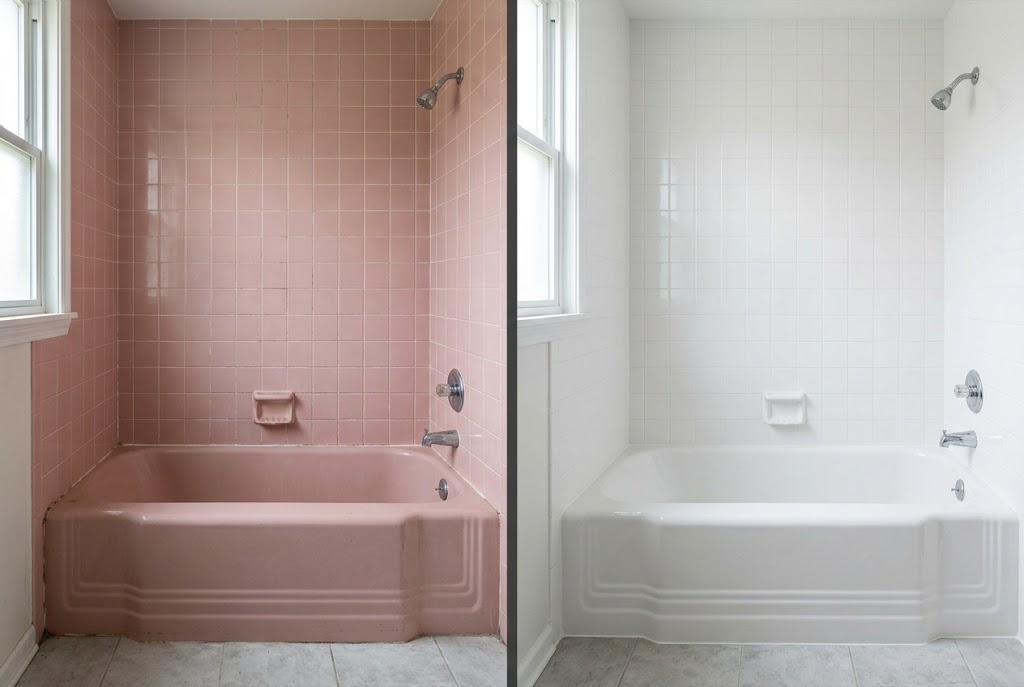 BeforeAfter
Pink square tile and a matching alcove tub refreshed in clean white, with the layout and chrome fixtures preserved.
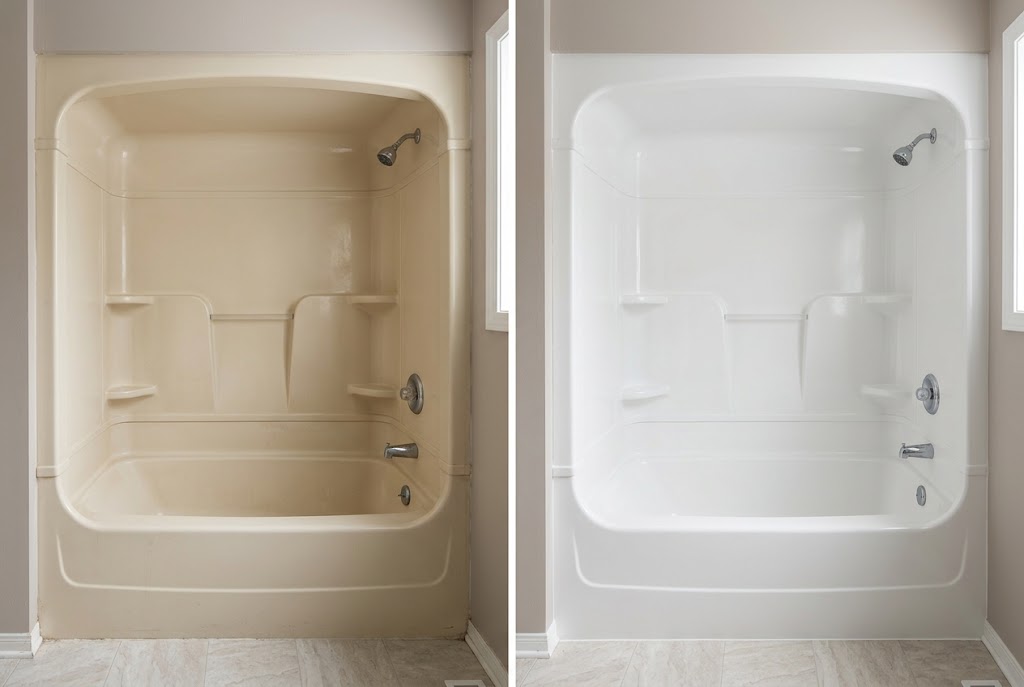 BeforeAfter
A molded fiberglass tub and surround refreshed in white while retaining the original shelves, curves and chrome fittings.
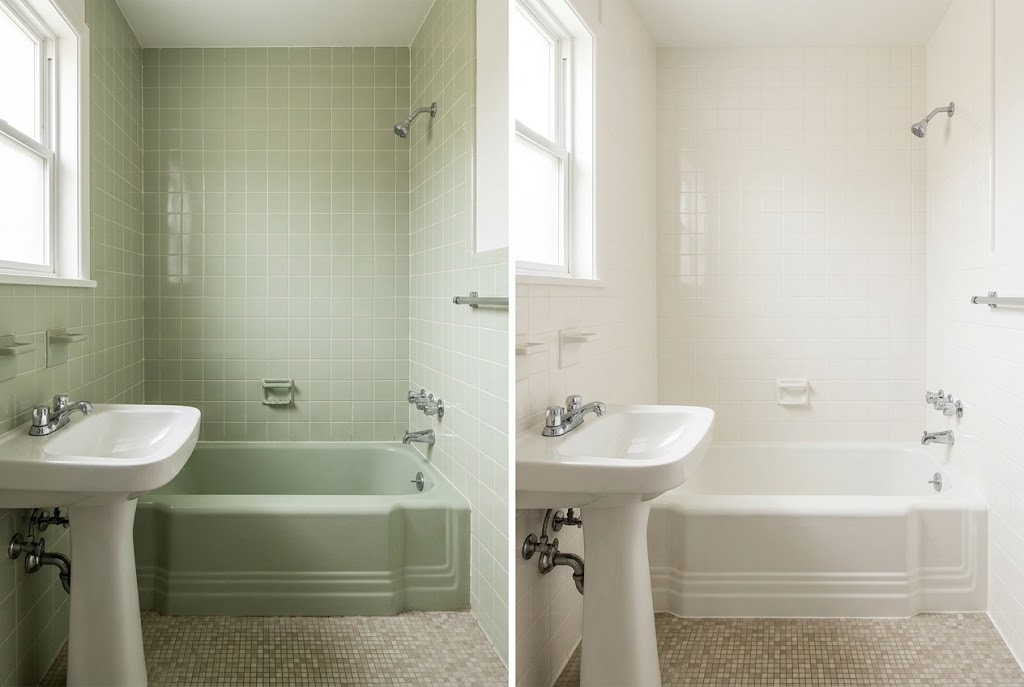 BeforeAfter
A pastel-green tile bath refreshed in warm white, preserving the square tile grid, pedestal sink and original room arrangement.
Swipe or use Previous and Next to explore the comparisons.
Tile Refinishing updates the finish of suitable existing tile, such as ceramic tile on bathroom walls, tub surrounds or backsplashes. It can help refresh a dated color while keeping the existing tile installation.
The tile size, pattern and grout-line layout generally remain. Expect a changed finish, not a new tile shape or a completely different arrangement.
Floors and shower bases need a separate suitability review for wear, wet conditions and slip resistance. Do not assume that a wall-tile finish is appropriate underfoot.
Countertop Refinishing changes the visible finish of a suitable kitchen counter or bathroom vanity top. It retains the existing counter rather than replacing it with a new slab or assembly.
Laminate, cultured marble, tile and some solid-surface materials can be candidates for professional systems. The material, prior coatings and condition determine what is appropriate for a particular counter.
Some systems offer solid-color or decorative finishes. A stone-look finish changes the appearance of the existing counter; it does not turn that counter into a stone slab. Available finishes for your project need to be confirmed.
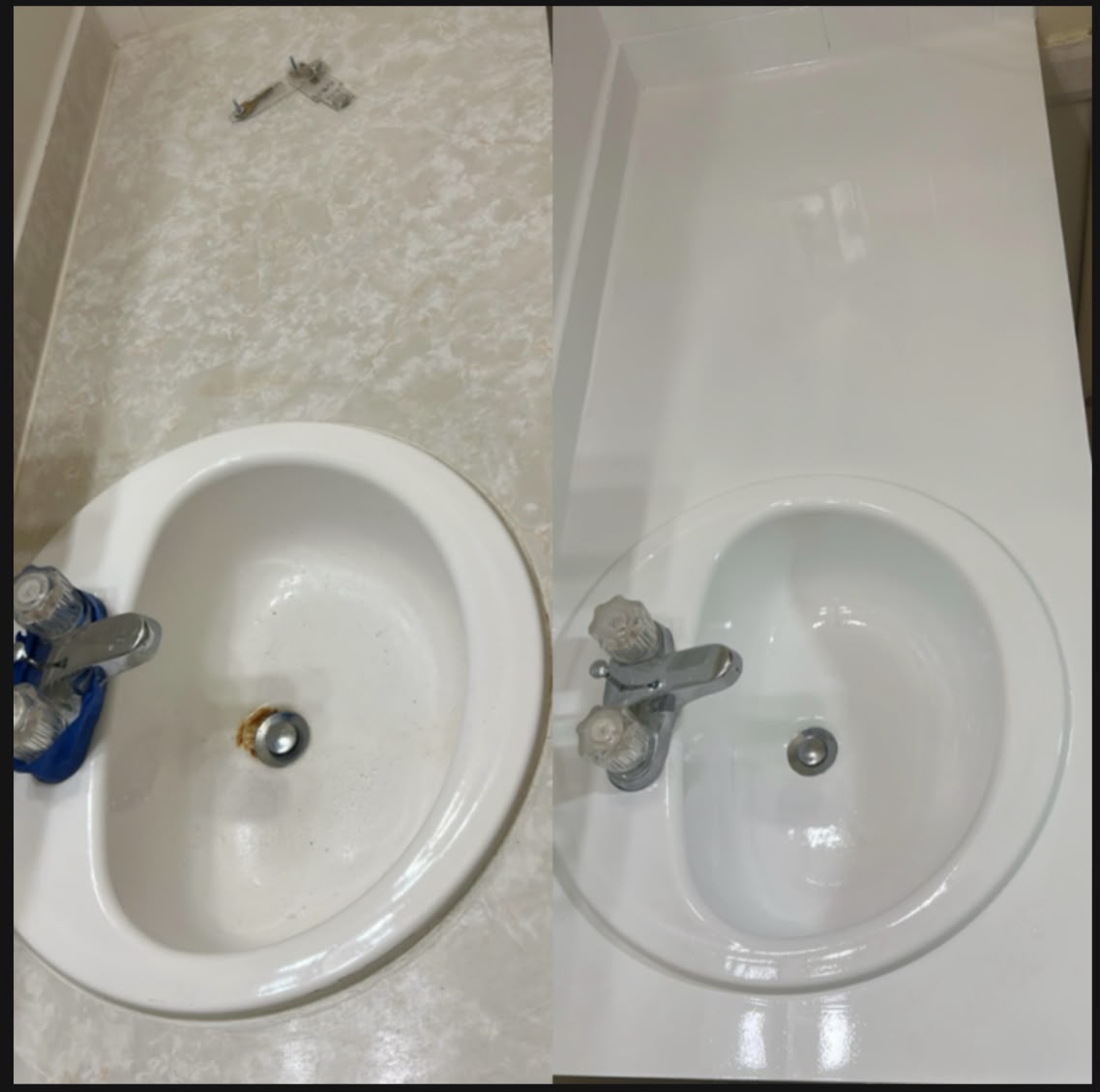
A beige vanity top and sink alongside a glossy white finish.
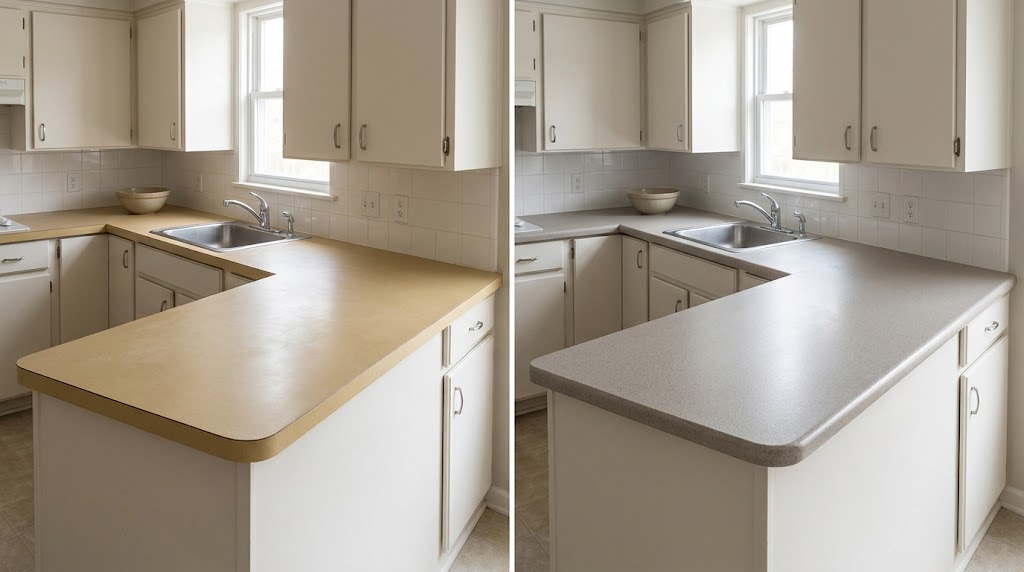 BeforeAfter
A new decorative finish on an existing kitchen counter.
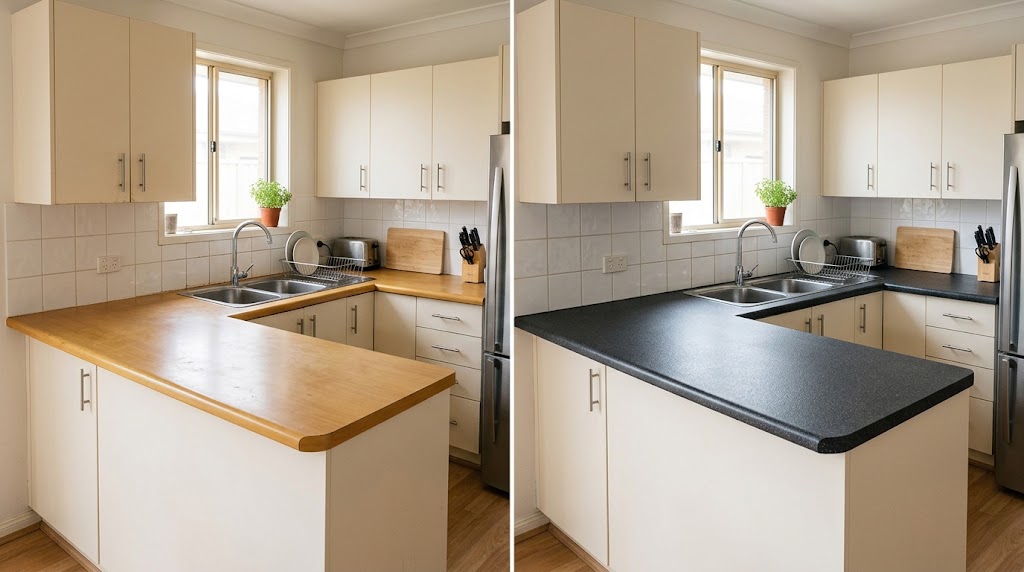 BeforeAfter
Golden kitchen laminate becomes a charcoal fine-speckle decorative coating, keeping the same counter shape, rounded edge and cream cabinets.
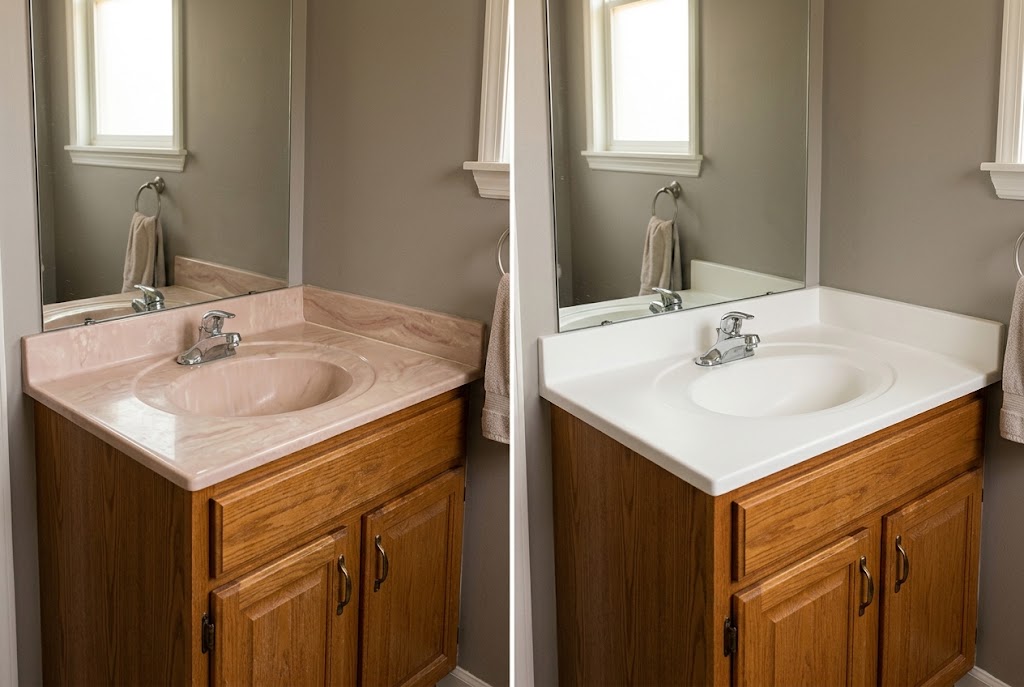 BeforeAfter
Pink cultured-marble vanity refinished in solid warm white, preserving the integrated oval sink, oak cabinet and chrome faucet.
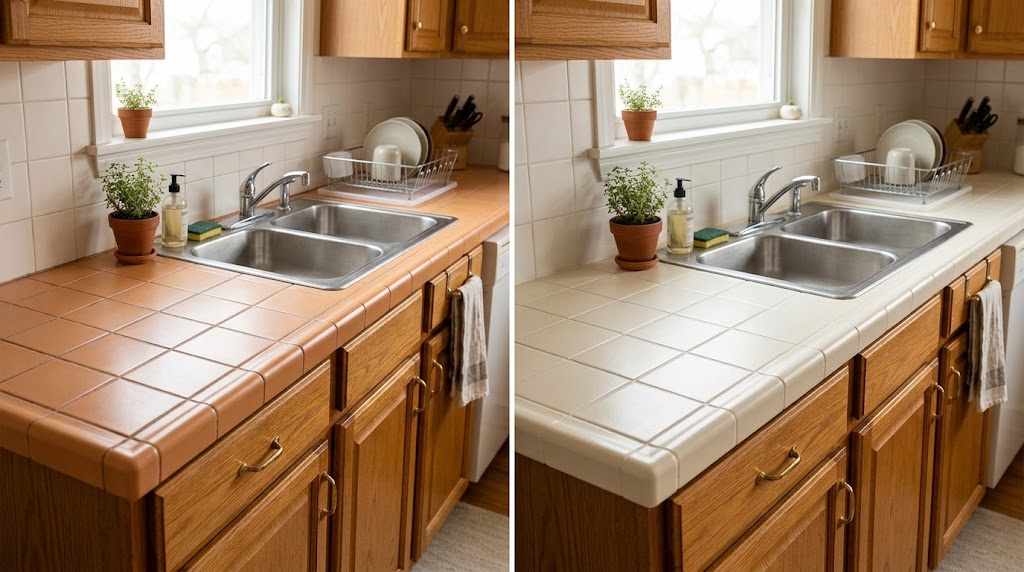 BeforeAfter
Dated apricot tile countertop refreshed in neutral ivory, retaining the visible tile grid, grout channels and bullnose edge.
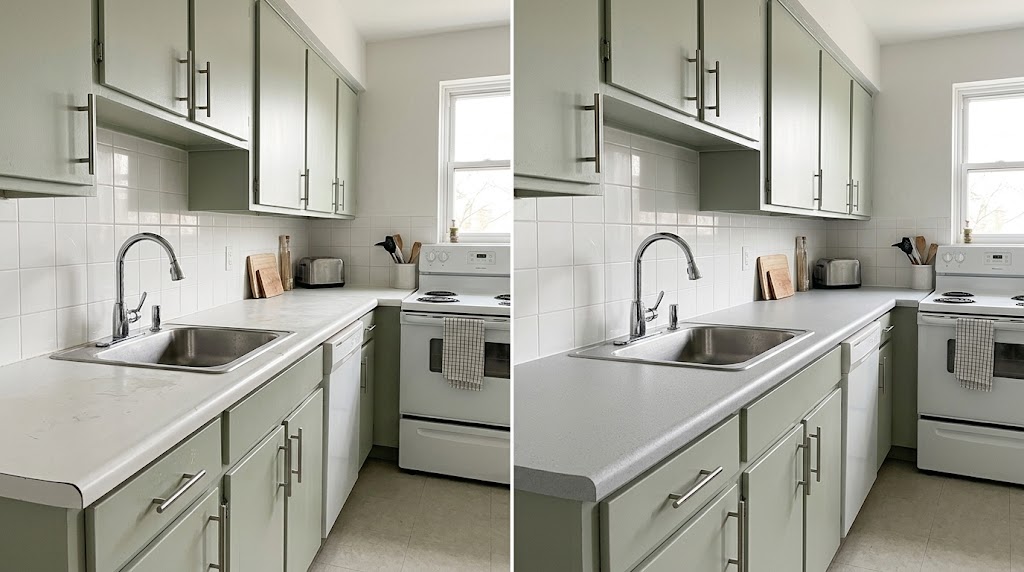 BeforeAfter
Worn white kitchen laminate refreshed with a light-gray micro-speckled finish, preserving the edge profile, backsplash, sage cabinets and appliances.
Swipe or use Previous and Next to explore the comparisons.
Refinishing is often considered for a cosmetic update to a sound surface. Replacement becomes more compelling when the structure, layout or material is what you want to change. Neither option is right for every project.
No blanket savings percentage or one-day promise: the existing condition and full scope determine the cost and schedule.
This is a general professional Refinishing sequence. The exact preparation, repairs and coating steps must be confirmed for your surface and the products selected.
Identify the material, existing finish, wear and any moisture or structural problem that should be resolved first.
Protect surrounding areas, plan the required ventilation and remove contamination that could prevent the coating from bonding.
Address suitable imperfections and prepare for adhesion. Sanding, old-coating removal or other steps depend on the existing surface and system.
Use the specified bonding, primer and coating sequence. The correct products and application depend on the material and intended use.
Keep the surface out of use until the approved time. Follow the written cleaning, accessory and care instructions for the finish used.
A surface can feel dry before it is ready for normal use. Application time, return-to-use time and full cure are different milestones; follow the schedule for your project.
Before the appointment, confirm ventilation, work-area access and instructions for people and pets. Odor and handling precautions vary by product; “waterborne” does not automatically mean odor-free.
It uses a coating system selected for the surface and its exposure to water, cleaning and use. Surface preparation and compatibility are essential. Ordinary wall paint should not be assumed suitable for a bathtub or countertop.
Sometimes. The earlier coating and underlying tub need inspection. Loose or failing coatings may require removal before the new surface is prepared. Tell us about any prior Refinishing.
Some localized surface imperfections may be repairable during preparation. Structural cracking, movement or active leaks need a separate assessment and repair or replacement plan. A new finish alone does not fix those problems.
Mold and its moisture source should be addressed before Refinishing. Painting over a moldy surface does not resolve the problem and may result in peeling.
Refinishing usually preserves the existing tile dimensions and grout-line layout. If you want a different tile format, arrangement or underlying waterproofing assembly, discuss a different scope.
It depends on the finish and conditions. Follow the written return-to-use instructions for your project, even when the surface already feels dry.
There is no single lifespan for every surface or system. Existing condition, preparation, coating selection, use and care all affect performance. Ask about the proposed finish and any written warranty rather than relying on a generic lifespan claim.
Include your town or ZIP code, whether the project is a tub, tile or counter, the material if known, and any damage or previous coatings. For tile and counters, approximate dimensions help define the scope.
Start with the surface you have, its condition and the look you want. We’ll discuss whether Refinishing fits your project.
Request a Refinishing estimate